Implementing a Best-in-Class Global Equipment Leasing Program

Background
Cummins Inc. is a global power leader that designs, manufactures, distributes, and services diesel and natural gas engines as well as related technologies. The company supplies the horsepower to PACCAR, Volvo Trucks, Daimler Trucks, Ford, and MAN in North America.
In 2010, Cummins was emerging from the recession with a relentless focus on growth and profitability. At the same time, the company’s finance executives were also methodically improving their processes in pursuit of operational excellence and financial reporting compliance. That’s when the CFO and Treasurer began to scrutinize equipment leasing.
Situation
Cummins was losing money in two ways. First, too much was being paid for lease capital on the front end. Second, far more expenses than originally planned were being incurred on each lease when they expired.
Although Procurement had a mature process for comparing equipment vendors to secure a competitive price, insufficient bidding ultimately drove costs back up. The company’s relationships with captive lessors were too tight, making a truly competitive lease quote difficult.
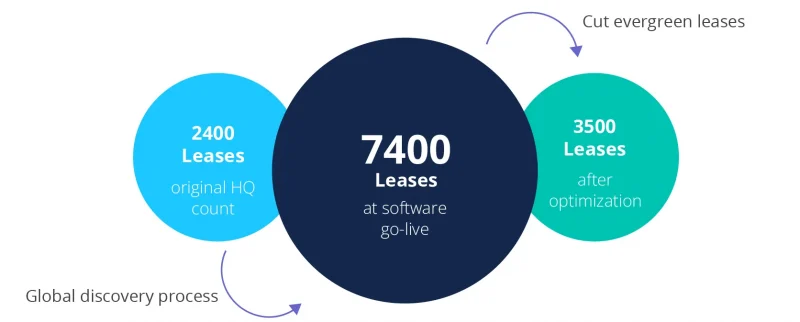
Cummins also was making many evergreen payments because there was no process to manage leases approaching the end-of-term. In many cases, Cummins was forced to buy out the equipment because they could not return it on time.
In summary, the leasing process was broken and the company was losing a lot of money.
Solution
The CFO initiated a project to drive savings and fix the process. Cummins needed a single, global, scalable leasing process. The ability to track leases, assets, stakeholders, and lessors across the leasing lifecycle around the world was needed. The company needed a software system that enabled decentralized decision- making while enforcing centrally administered controls. Critical to success was the need to maintain a complete, accurate, and centralized leasing database.
Treasury was the corporate sponsor for the initiative. However, Treasury collaborated with IT, Shared Services, and Procurement to consider, find, and implement a solution.
Cummins ultimately selected LeaseAccelerator for its Equipment Lease Management program. Using the Software-as-a- Service model, the application went live several weeks after the contract was signed. LeaseAccelerator’s application was configured to reflect Cummins’ corporate hierarchy and General Ledger code structure. Key variables including Internal Borrowing Rate, Cost of Debt and Weighted Average Cost of Capital were defined in the system. The most complex part of the implementation was the collection and loading of the leasing documents.
Impact
Since inception of the project, Cummins has run approximately 9,000 leases through the global leasing process with an original equipment value approaching $800 million (USD).
Reduced cost of equipment leases
Now, competing lease transactions is a companywide standard practice. Through the automated RFP process, over 73 competitive sourcing events have been completed in 26 countries. The new competitive model yields with an average cost of savings 8% per lease.
Better lease portfolio management
Since the new equipment lease management strategy was implemented, performance has improved consistently each year. Negotiated savings have been converted to realized savings, driving bottom-line performance. Evergreen payments as a percentage of total annual payments (excluding termination fees) dropped from 18% at program inception to an average of 8.5% in subsequent years. The “unplanned/unintended” portion of spend dropped by more than half.
Established policies and controls
Specific policies and controls were put in place throughout the lease lifecycle. This resulted in better operational and financial controls.
Ready for new lease accounting standard
The software makes the appropriate calculations for the current standard and the new standard, enabling Cummins to generate multiple sets of books and parallel reporting. Additionally, the company can use the tool on a daily basis to maintain the accuracy and completeness.
Competitive edge
Better lease management provides Cummins with an edge over its peers in the Industrial Manufacturing sector. Cummins is in the process of acquiring its North American distributors. LeaseAccelerator has made the merger integration process smoother, loading the distributor lease portfolios into the application and then converting the units into the global leasing process.
Increased visibility
All stakeholders have visibility into the lease portfolio and the leasing lifecycle. The visibility was achieved using the Lease vs. Buy process, automated notifications, and online reporting tools.
Goals, metrics, and best practices
Cummins achieved the CFO’s goal of fixing the process as well as the Treasurer’s goal of cost savings The company now has well-defined processes and controls. There is still opportunity to further reduce costs at the end-of-term. However, Cummins equipment lease management processes are now based on best practices.